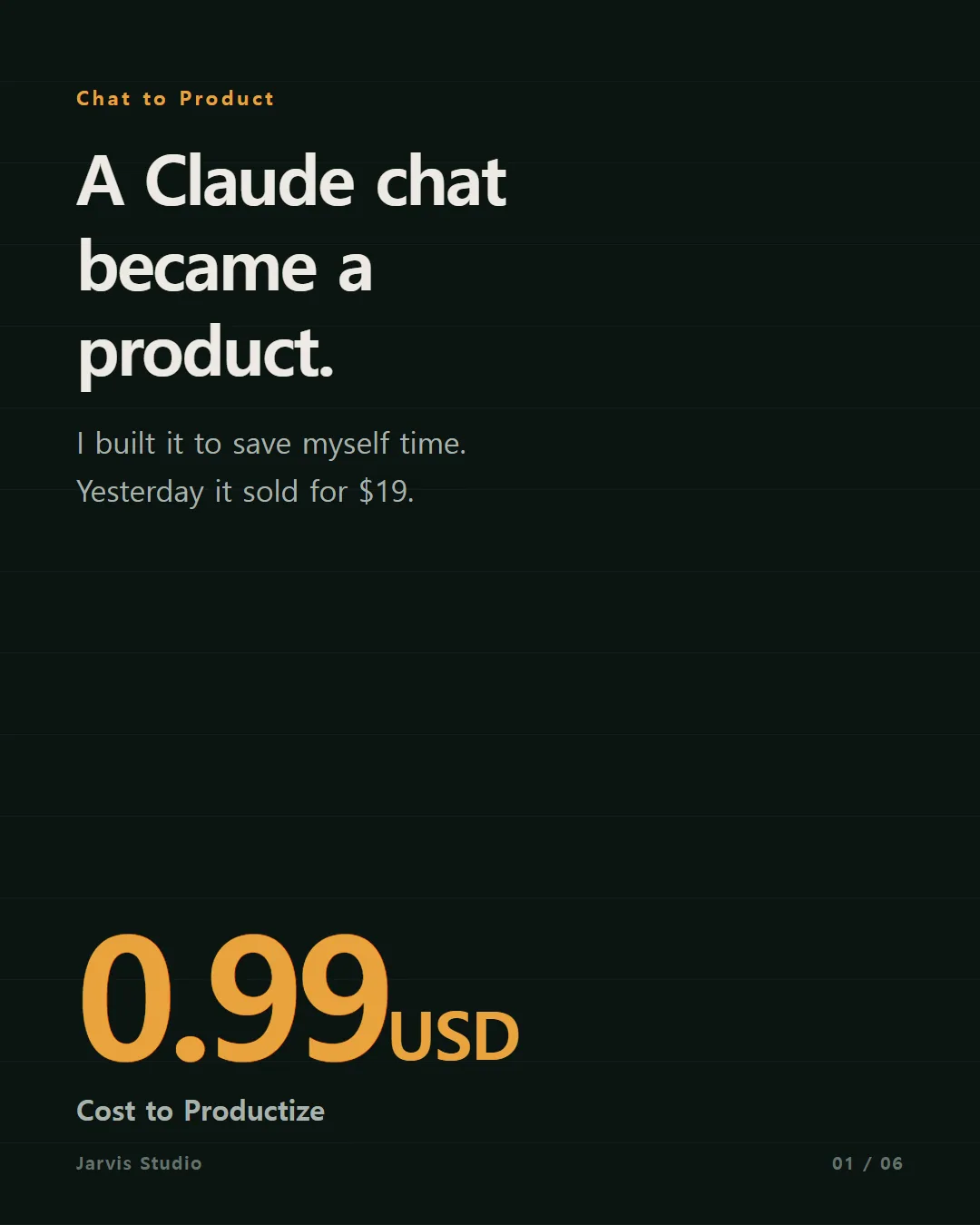
The only money I spent was 99 cents.
Over a few days of talking with Claude, I automated my own short-form video pipeline. I started it purely to make my own work easier.
What it left behind was a folder with 16 files in it — feed it a script, get a video out. So I listed it on a marketplace for $19.
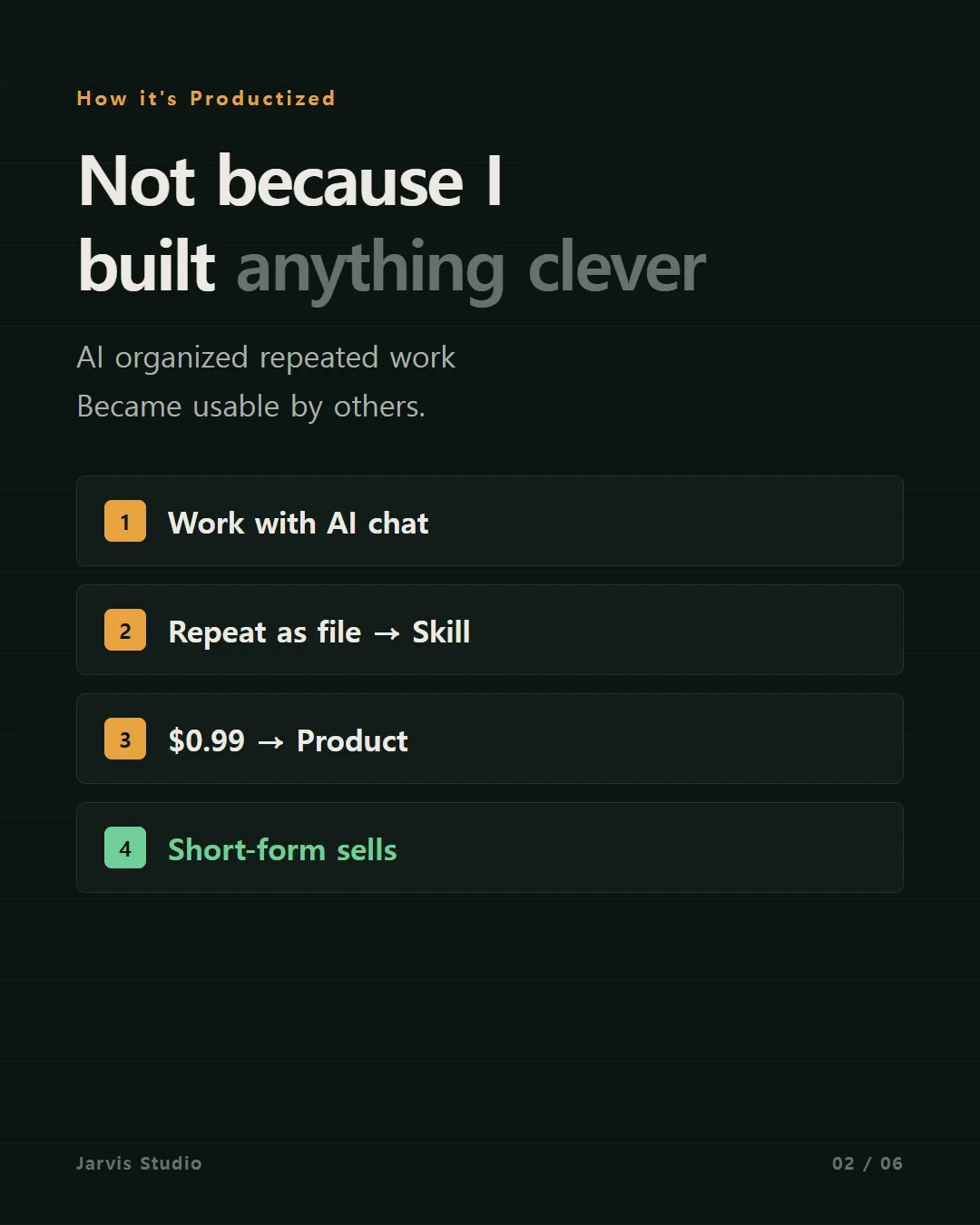
The part worth saying out loud: this is not because I built anything clever. I organized work I was already repeating, with an AI, and the result happened to be in a shape other people could use. Turning that folder into a product cost $0.99.
What Capafy is
A marketplace for buying and selling skills for AI coding agents — Claude Code, Codex, OpenClaw and the like. Over 1,000 agents listed, around 450 publishers.
The format is the one you are already using: a single SKILL.md with scripts/, references/, and assets/ beside it. Anthropic, OpenAI, and Microsoft share this shape, so if you already have a skill you use, you can list it as-is.
What it actually costs
This is hard to find by searching. These are the numbers I confirmed by going through it.
| Item | Amount |
|---|---|
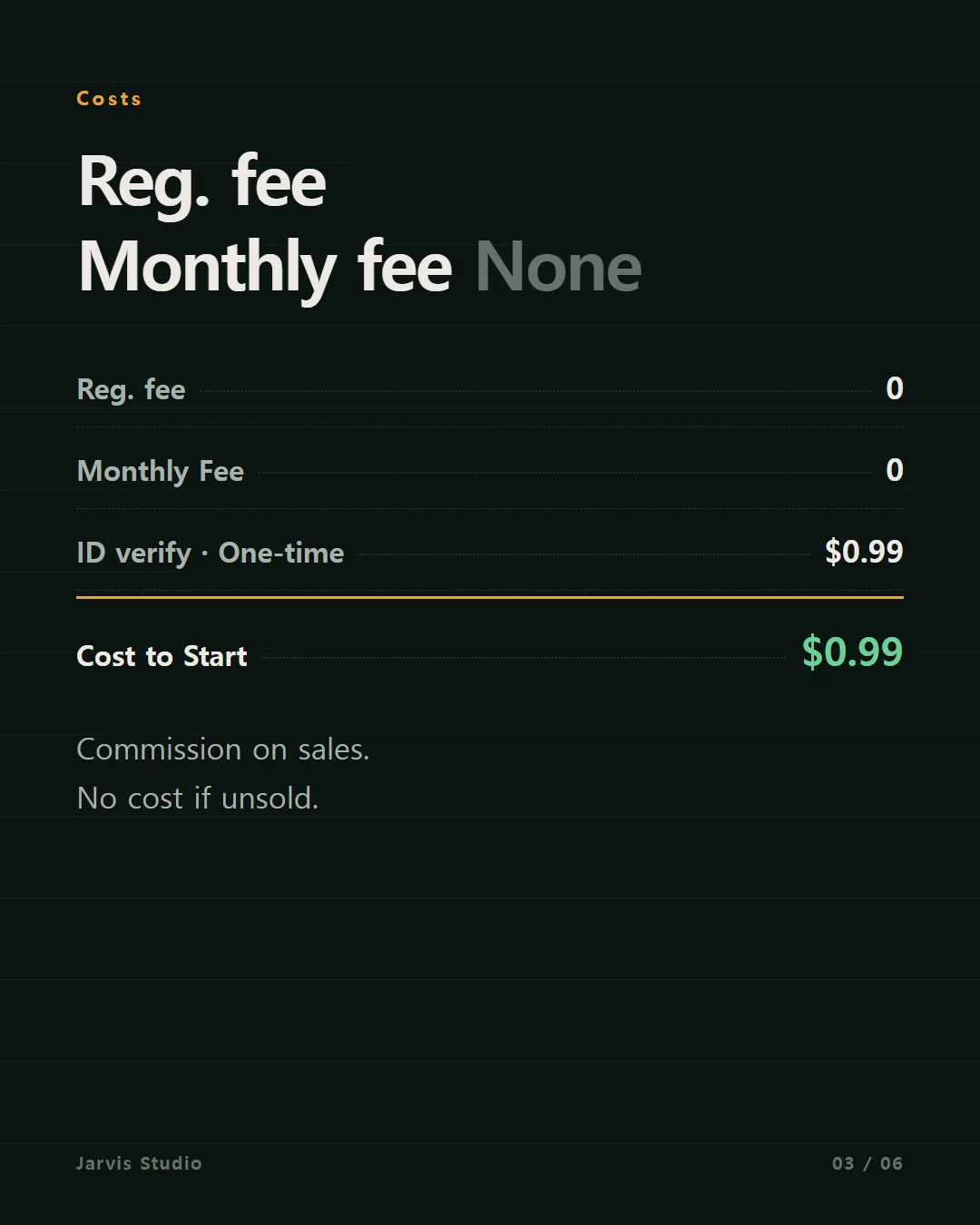
| Platform fee | 20% of the sale |
| Publisher verification (KYC) | $0.99 — one time, non-refundable regardless of outcome |
| Listing fee · monthly fee | None |
Which works out like this for me:
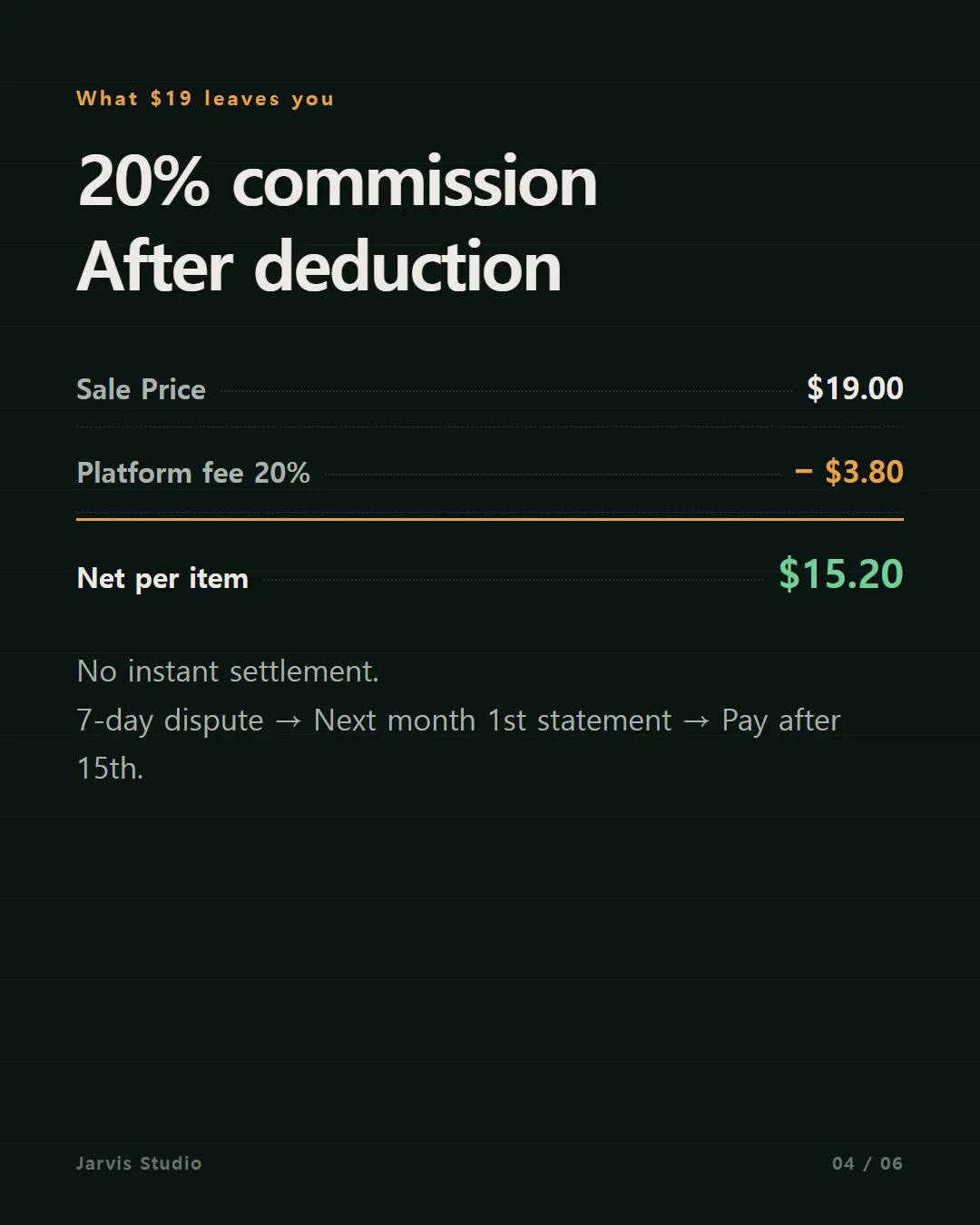
| Sale price | $19.00 |
| Platform fee (20%) | − $3.80 |
| Net per sale | $15.20 |
Payout is not immediate: purchase → 7-day dispute window → statement on the 1st of the following month → paid after the 15th. The figure in the console is live, so refunds move it.
Two selling modes — pick carefully
This is where the cost structure really diverges.
| Download | Run on Capafy | |
|---|---|---|
| Runs on | Buyer's machine | Capafy cloud |
| Billing | One-time purchase | Hourly or subscription |
| Minimum price | None (free is allowed) | $1/hour or $8/month |
| Extra fees | None | Sandbox, $2–8/month |
| API costs | Buyer pays | Publisher pays |
I chose download. My skill uses ffmpeg, Python, and Remotion on the user's machine and runs on the buyer's own API key. Running that in the cloud means carrying every one of those dependencies on a server, plus sandbox fees. If your tool runs locally, download is the right mode.
The four things that actually blocked me
This is the real reason for the post. Every one of these cost me time.
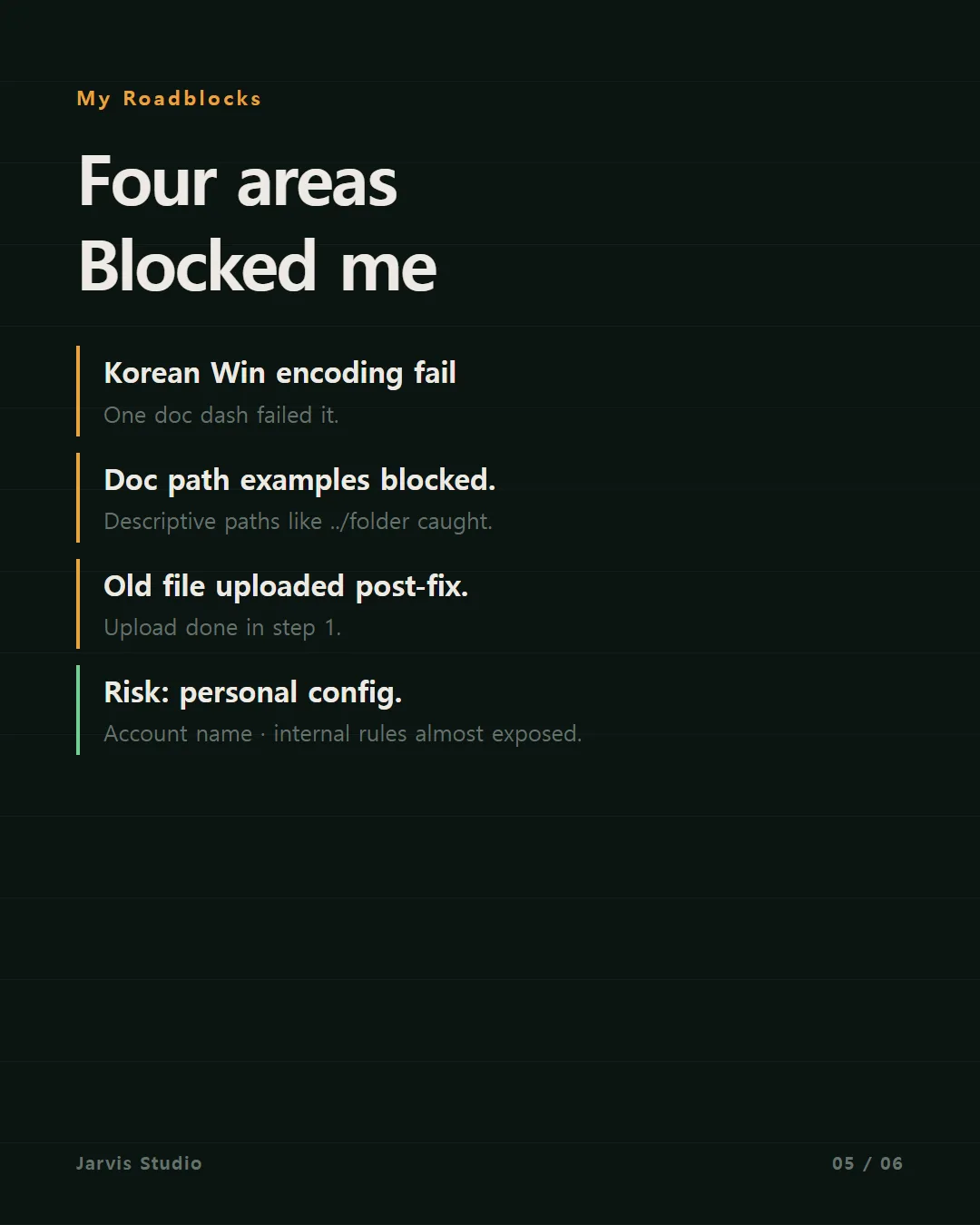
1. Encoding errors on a non-English Windows console
The publish command died on a single em dash in my SKILL.md. A Korean-locale Windows console uses a legacy encoding by default and falls over on Unicode. Prefixing the environment variable fixes it:
set PYTHONUTF8=12. Example paths in the docs get blocked
Packaging stopped because of a rule about leaving the author's machine paths in the package. What it actually caught was illustrative paths written in the documentation — things like ../remotion and ./props.json. Real imports in the source pass; markdown paths get flagged. Replacing them with placeholders like <remotion-project-path> cleared it.
3. Fixing the file does not fix the upload
I fixed #2, re-ran, and got the identical error. The upload finished back in step one, and everything after that packages the copy sitting on the server. Editing locally changes nothing.
--reset-local-stateYou have to re-run the upload step with that flag. Your card content lives on the server and survives, but the skill selection resets and has to be re-checked.
4. I nearly shipped my personal config
This was the alarming one. The card screen asks whether to include workspace documents, and CLAUDE.md was sitting there as a candidate.
Think about what is in yours. Mine has social account names, internal operating rules, folder structure, and working conventions. Download mode hands the source to the buyer. One checkbox and all of that ships.
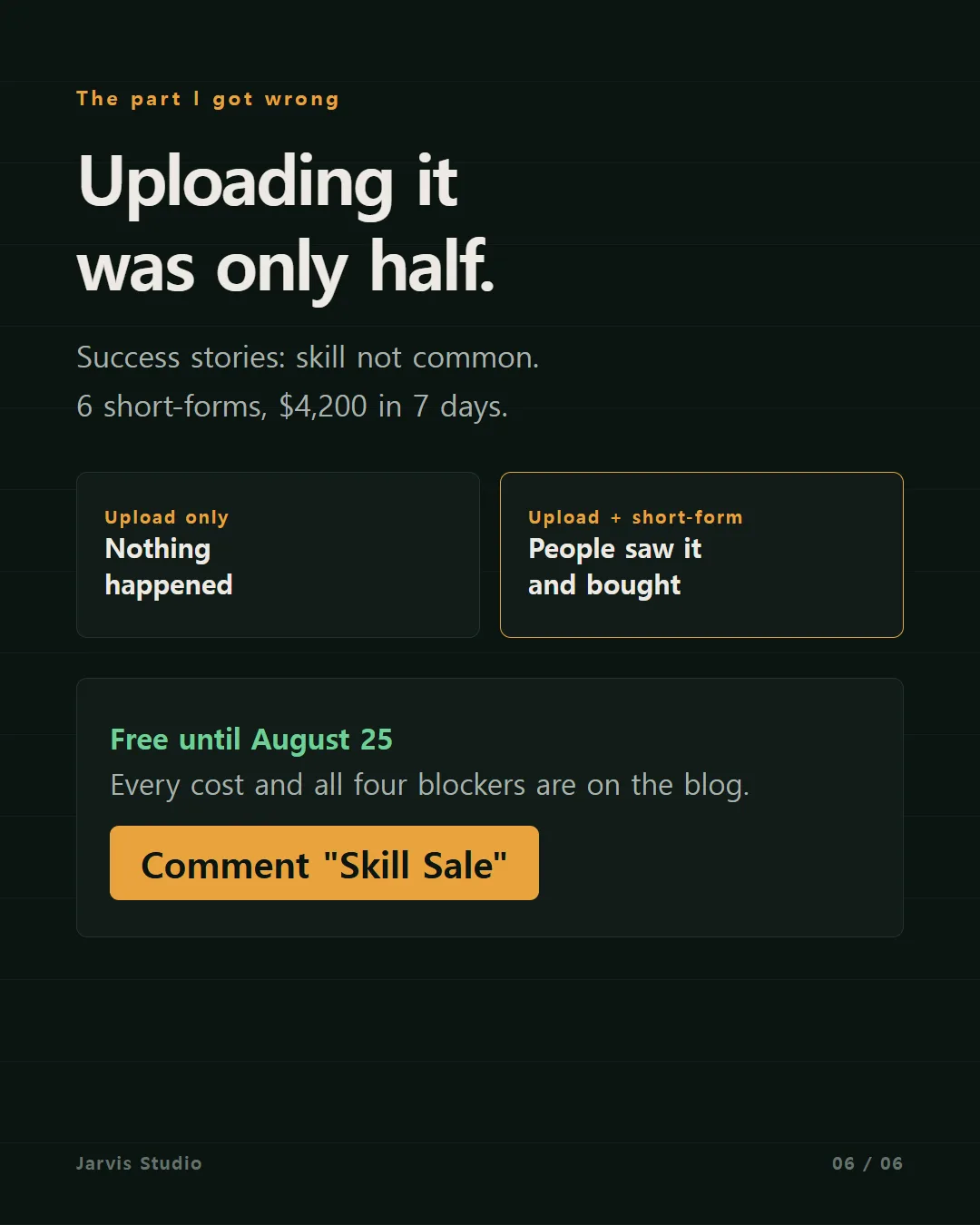
Uploading it was only half
The listing going live did approximately nothing on its own. What moved it was short-form video pointing at it. A marketplace listing is not distribution.
If you are considering it
The bar is lower than it looks. You do not need to have built something clever — you need something you already repeat, organized enough that a stranger can run it.
But budget for the four blockers above. They cost me more time than building the thing did.
The short version
AI coding workflows, tested on real work — not demos. New posts weekly.