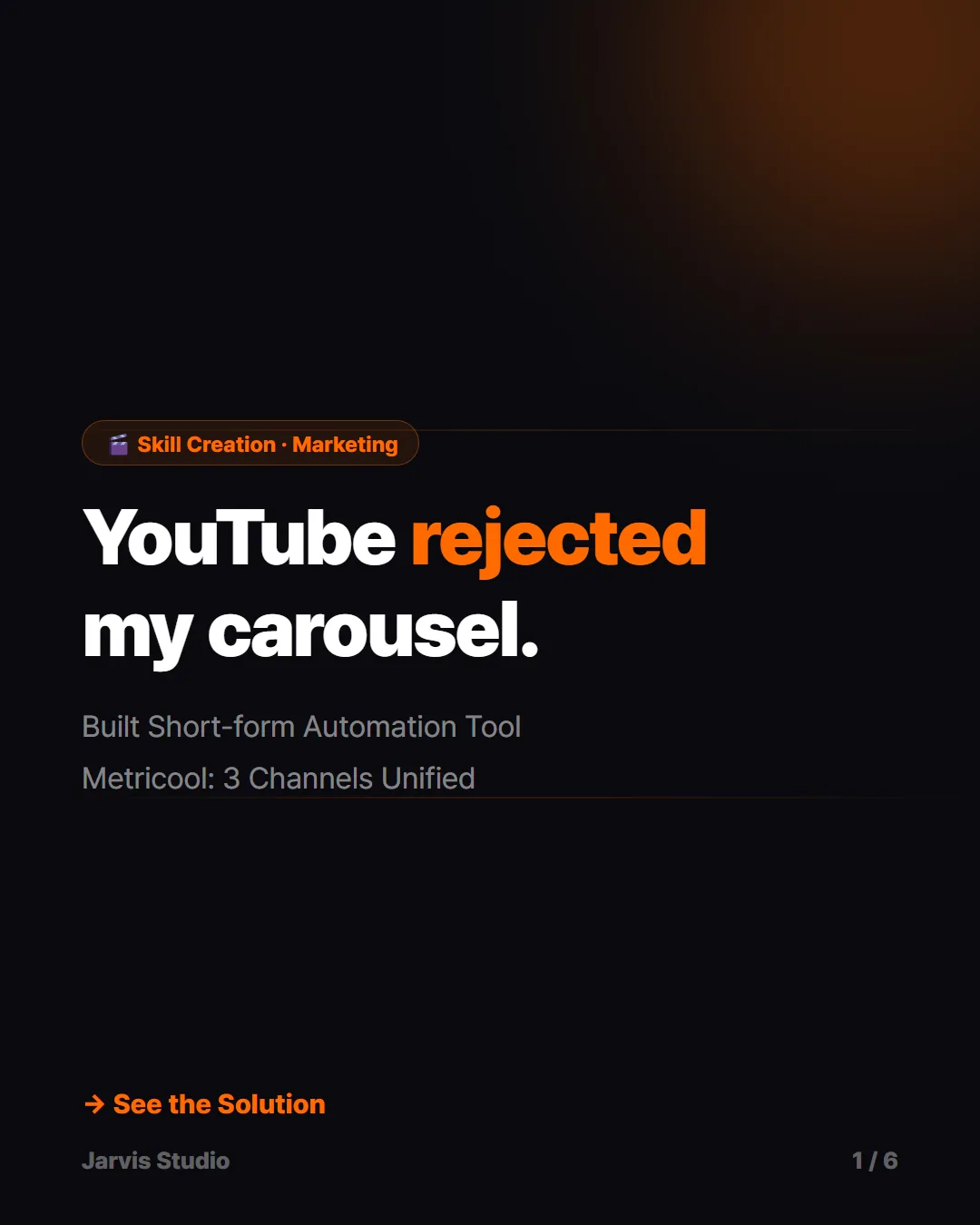
There is no "several images" on YouTube. Shorts is video or nothing.
I turned my marketing workflow into a Claude skill, then actually ran it to publish to channels — and problems appeared that never came up while building apps. Shipping software and shipping marketing are genuinely different work, and this is where I felt it.
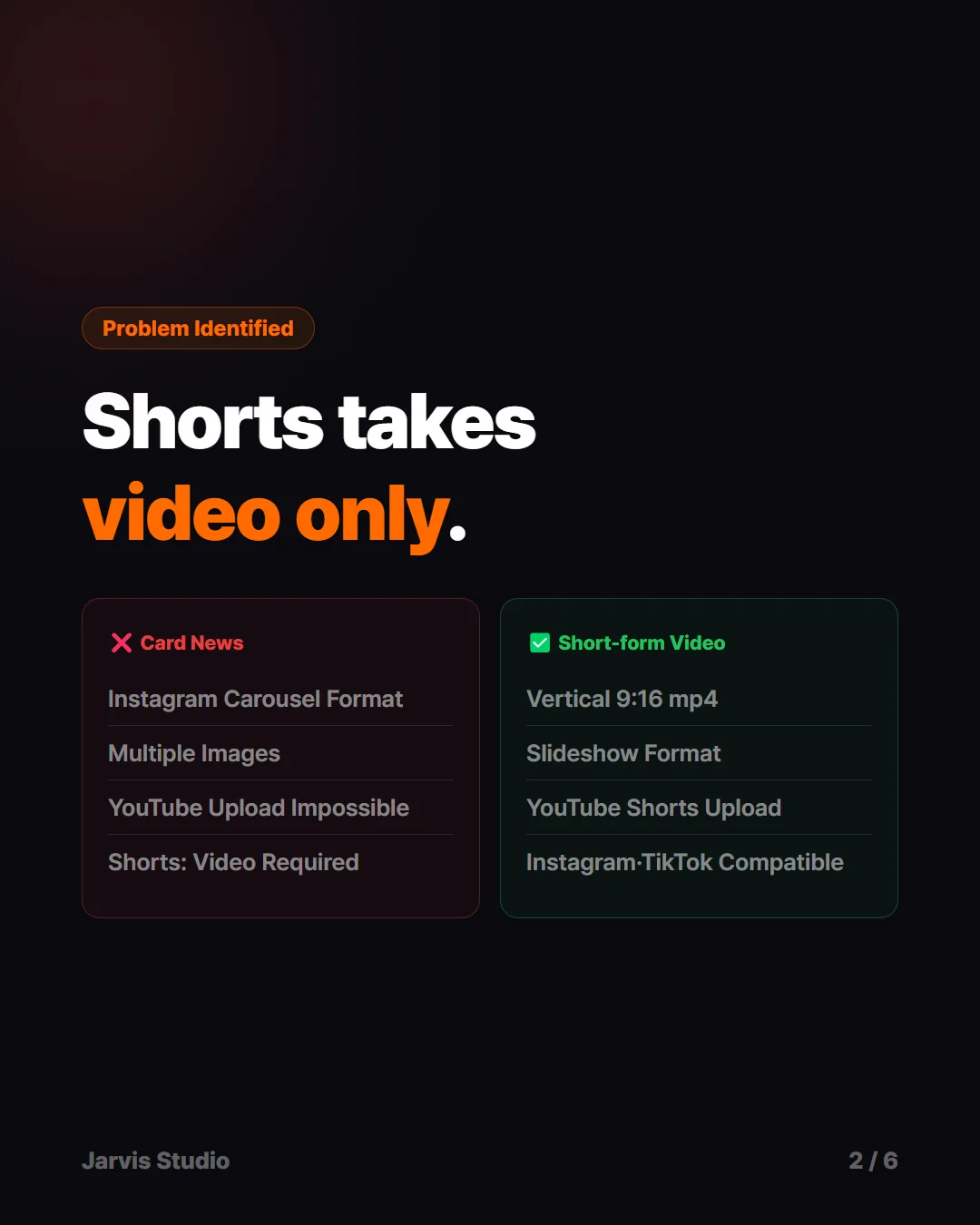
A carousel cannot go on YouTube
I had a set of card images built for an Instagram carousel and assumed they would transfer. YouTube has no concept of "several images." Shorts takes a video file.
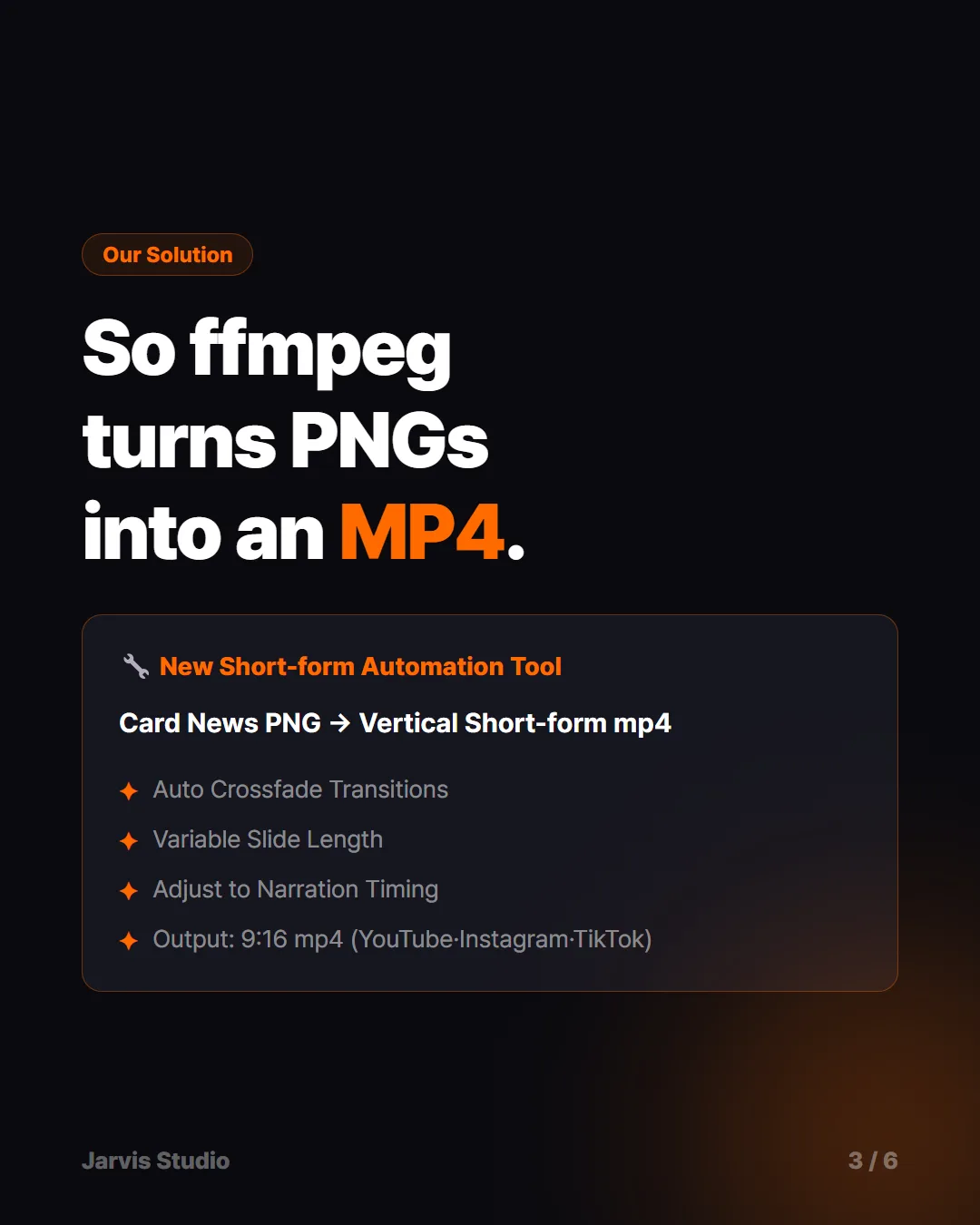
So I built a small tool that stitches the card PNGs into a vertical 9:16 slideshow. It cross-fades between slides, and each slide can have its own duration — which matters later, when narration has to land on specific frames.
cards/*.png  →  ffmpeg  →  short.mp4   (1080x1920)
                  · cross-fade between slides
                  · per-slide duration
                  · so narration can be timed to it later
Making the video was not the end of it
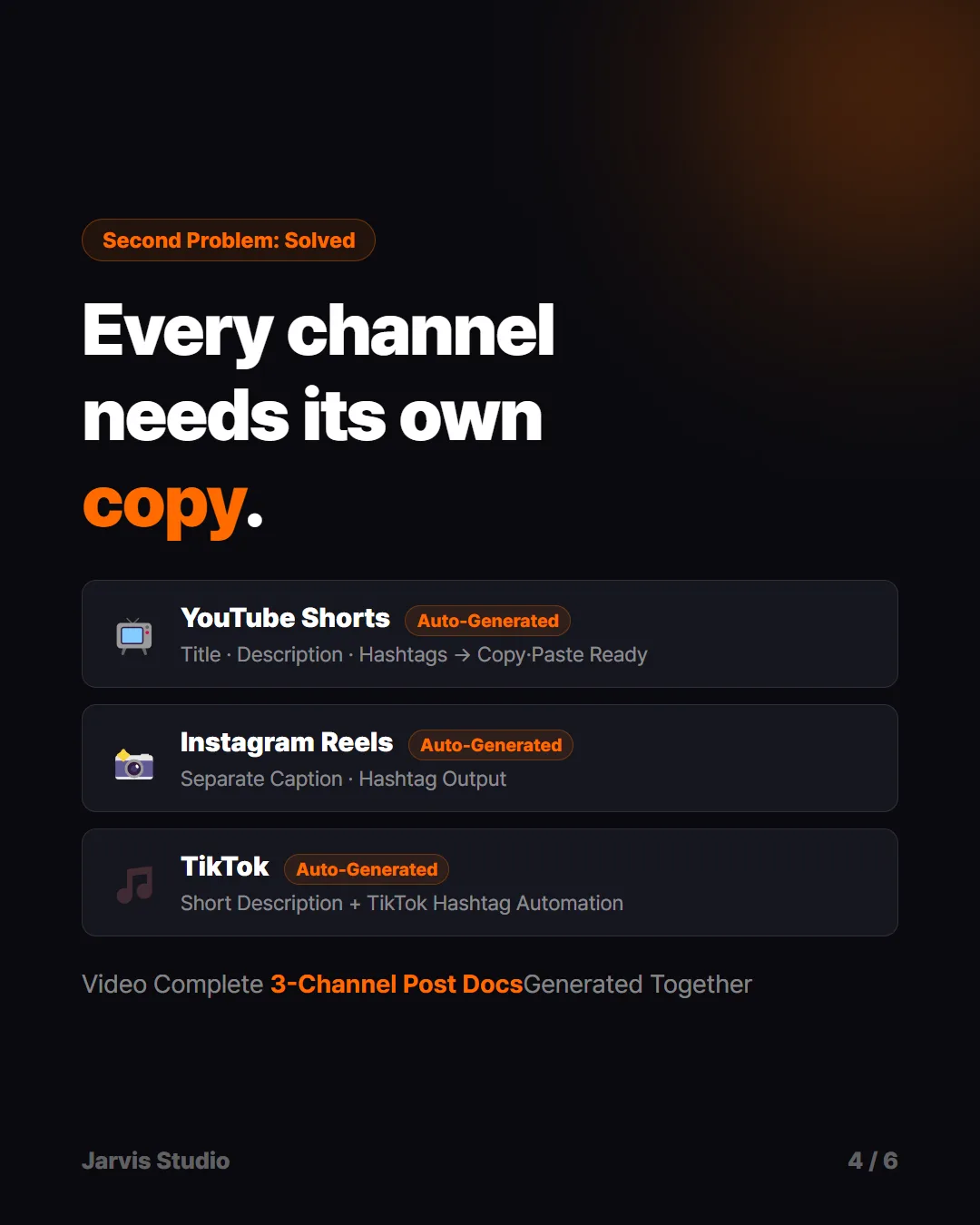
The next part turned out to be more annoying than the encoding. YouTube, Instagram, and TikTok each want their own title, description, and hashtags. Writing three sets by hand for every piece is exactly the kind of task that quietly stops happening.
So the tool now emits the per-channel copy alongside the video. One run produces the MP4 and a document you can copy-paste straight into each platform.
Building an app is done when the code is right. Marketing has a surprising amount of work sitting between "I made it" and "it went up on every channel in the right shape with the right description." Closing that gap is what automation is actually for here.
One screen for three channels
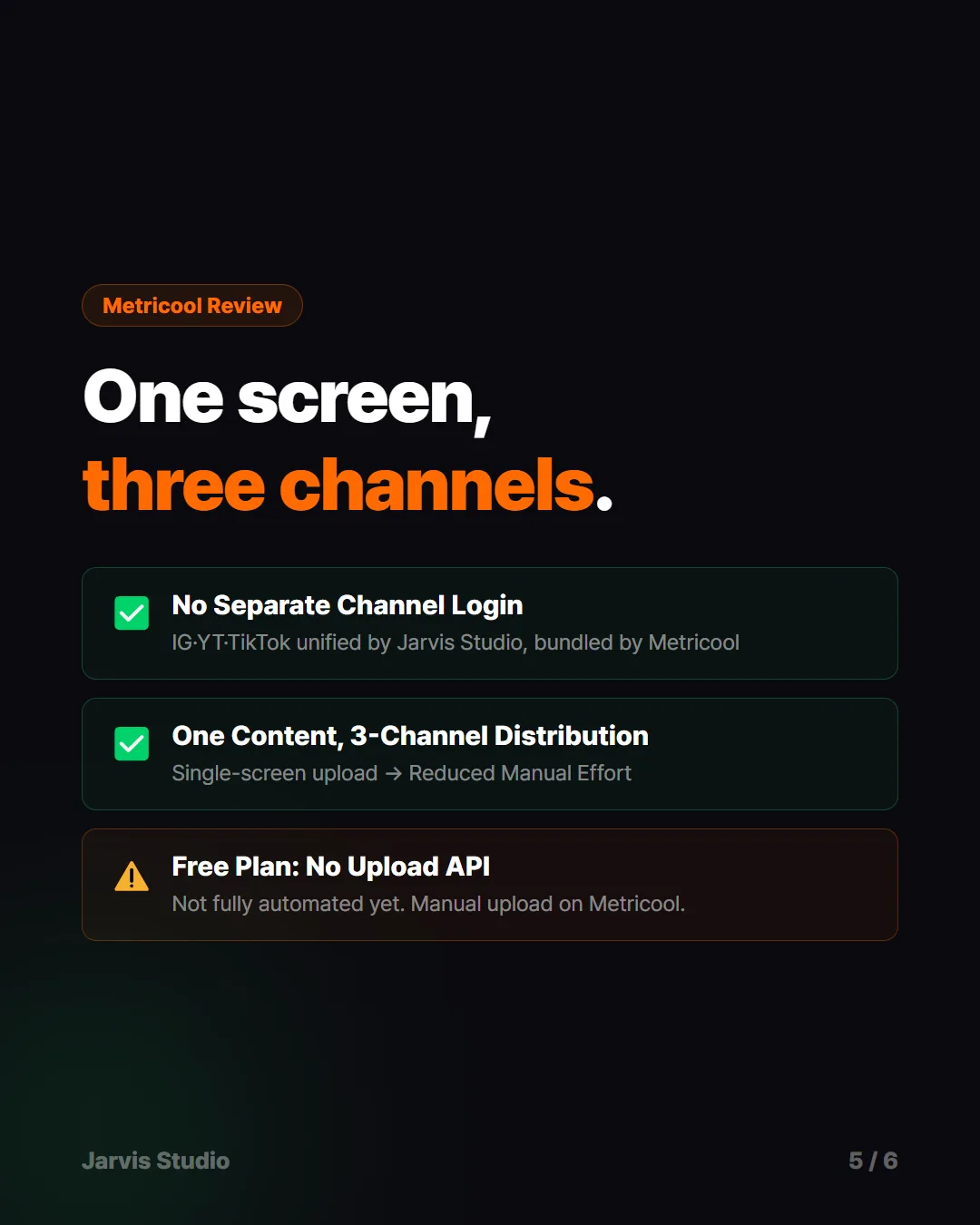
Signing up separately per platform and posting one at a time was not going to hold. I consolidated Instagram, YouTube, and TikTok under a single identity and connected all three to Metricool.
The original plan was to automate uploads through the API, but the free tier does not include upload API access, so a human still posts from the Metricool screen. Even doing it by hand, pushing one piece to three channels from a single screen removes a real amount of friction compared to logging into each one.
Where this goes next
The videos at this stage are silent slideshows, and that is the obvious weak point. Adding narration is the next step, and after that, recording actual app screens instead of relying on cards.
The takeaway
If you are repurposing one piece of content across platforms:
The format conversion is the easy half. The copy is what silently blocks you — three platforms means three sets of text every single time, and that is the step that gets skipped. Generate it in the same run that produces the file.
The short version
AI coding workflows, tested on real work — not demos. New posts weekly.